

+91 91089 07666 [email protected]
Innovations

Predictive Intelligence

Predictive Intelligence

Predictive intelligence is a high-end domain dealing with data analytics that discusses forecasts and trends of future events from past data and advanced analytical techniques. Predictive intelligence transforms raw data into actionable insights for guiding strategic decision-making by using statistical modeling, machine learning algorithms, and data mining tools. It involves techniques such as regression analysis, time series forecasting, and classification algorithms that help in making predictions with a high degree of accuracy by analyzing the patterns and trends observed in the past.

Predictive intelligence is paramount in various industries, such as finance, healthcare, marketing, and supply chain management, in this highly data-driven modern world. It allows organizations to predict customers' behavior, optimize operational processes, manage risks, and maximize emerging opportunities. For instance, predictive models that were used in business assist in sales forecasting and improve customer targeting and inventory management. As for healthcare, predictive analytics is applied to identify health risks and to personalize treatment plans.

Objectives:
  • Understand the principles of predictive analytics and its role in decision-making
  • Learn and apply various predictive modeling techniques and algorithms..
  • Develop skills in data preparation, feature engineering, and model evaluation.
  • Utilize predictive intelligence tools and software for practical applications.
  • Analyze and interpret predictive model results to inform strategic decisions.
  • Overview of Predictive intelligence

    Predictive intelligence, however, is a step ahead—a fusion of predictive analytics with AI and machine learning techniques aimed at deriving insights and event forecasts against the backdrop of history and real time. This area goes beyond traditional predictive analytics since it incorporates AI-driven techniques that would be able to learn from data patterns and adapt with any new information continuously in order to arrive at better predictive accuracy.

    Future Trends of Predictive Intelligence

    Predictive intelligence has grown hugely through advances in data science, machine learning, and artificial intelligence to provide actionable insights and forecasts. Traditionally, predictive analytics was about applying statistical methods against historical data to identify trends. Then it changed a bit with the adoption of machine learning algorithms and AI to let models learn from data, adapt to new information, and improve their predictions.

    Predictive intelligence implies long-term development, in particular sophisticated algorithms, with the growth of ensemble methods, deep learning, and natural language processing. It opened up scope and increased the accuracy of prediction. Big data technologies and cloud computing further pushed the boundaries in terms of processing and analyzing huge amounts of data in real time. Predictive intelligence is being used today across a wide array of industries, from financial services and health care to retail and manufacturing, and it is forcing innovation in everything from personalized customer experiences to optimized supply chains to proactive risk management.

    Graph-Based ML

    Utilizing graph-based Rapsol approaches to represent and analyze relationships between data points enhances predictive capabilities, especially in network analysis and complex relationship modeling and useful in social network analysis.
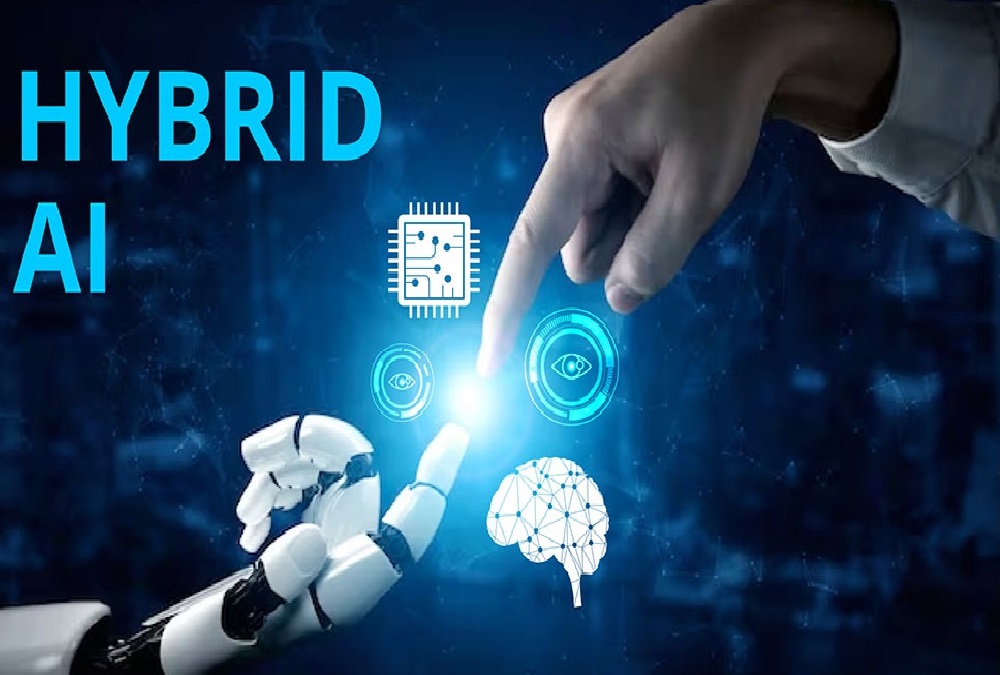
    Hybrid AI Systems

    Combining different AI technologies, such as integrating machine learning with rule-based systems or symbolic AI, creates hybrid models that can leverage the strengths of each approach. These systems improve prediction accuracy and flexibility in diverse applications.

    Deep Learning Advances

    The evolution of deep learning architectures and generative adversarial networks (GANs), allows for more accurate and nuanced predictions. Transformers improve natural language processing tasks, while GANs generate synthetic data to boost model training.

    Predictive intelligence has advanced significantly, leveraging sophisticated analytics, machine learning, and artificial intelligence to forecast future trends and outcomes with increasing precision. Traditionally, it relied on statistical techniques to analyze historical data, but recent developments have introduced more complex algorithms, such as deep learning and natural language processing, enhancing its capability to handle diverse and unstructured data. The integration of real-time data processing and cloud computing has revolutionized the field, enabling dynamic and timely predictions across various industries. Looking ahead, future trends in predictive intelligence include the rise of explainable AI for better transparency, the automation of machine learning processes through AutoML, and a heightened focus on ethical considerations and bias mitigation.

    PERSONALIZED PREDICTIVE ANALYTICS

    Rapsol is pioneering Personalized Predictive Analytics by tailoring advanced analytics solutions to individual user behaviors and preferences. Their approach utilizes sophisticated machine learning algorithms and data-driven models to provide customized predictions that align with the unique needs and patterns of each user. By analyzing historical data, real-time interactions, and contextual factors, Rapsol’s personalized analytics deliver highly relevant insights and recommendations.

    Rapsol is transforming the field of Personalized Predictive Analytics by leveraging advanced technologies to tailor predictive insights and recommendations specifically to individual users. Their innovative approach combines machine learning models with detailed behavioral data to deliver highly customized analytics. By analyzing a user’s past interactions, preferences, and real-time activities, Rapsol creates dynamic models that provide personalized predictions across various applications.

    Predictive intelligence solutions are designed to enhance predictive and decision-making capabilities through advanced data analysis and modeling techniques. These solutions typically use sophisticated predictive analytics platforms such as IBM Watson or Google Cloud AI, which provide the tools needed to build and deploy accurate predictive models If machine learning and deep learning algorithms used, these techniques analyze historical and real-time data to reveal patterns and generate knowledge predictions. Integration of data technologies enables you to process and analyze large amounts of data more efficiently, ensuring that predictions are based on detailed information Furthermore, real-time analytics tools such as Apache Kafka enable immediate, free data processing need for applications that need rapid responses to upcoming trends to manufacture, delivering powerful frameworks to optimize operations and make strategic decisions based on predictive insights

    Request A Quote

    Need A Free Quote? Please Feel Free to Contact Us

    Reply within 24 hours

    "We're dedicated to assisting you, whether it's project planning, event coordination, or finding inspiration. Our team is ready to provide a personalized quote at no cost. Contact us today and let's begin turning your vision into reality.

    Call to ask any question

    +91 91089 07666

    Frequently Asked Questions

    Predictive intelligence refers to the use of advanced data analytics, machine learning, and AI to predict future outcomes and behaviors. By analyzing historical data, patterns, and trends, it helps organizations make informed decisions, anticipate challenges, and take proactive actions.

    It analyzes historical data and identifies patterns using algorithms to predict future events or behaviors.

    It improves decision-making, reduces costs, increases efficiency, and helps anticipate risks and opportunities.

    It is used in retail, finance, healthcare, manufacturing, and marketing to optimize operations and decision-making.

    Machine learning helps improve predictions by learning from data patterns and continuously refining models.

    Predictive intelligence forecasts future outcomes, while descriptive analytics focuses on past data.


    YOU HAVE A IDEA !

    WE HAVE A TEAM !

    TOGETHER , LET'S BUILD YOUR BUSINESS ONLINE Talk to Us

    Get In Touch

    "Srinidhi", No.138/c, 2nd Floor, 2nd Main Road, 3rd Block, Thyagarajanagar, Bengaluru, Karnataka 560028

    +91 91089 07666

    Popular Links

    Registered Under :